Betting hasn’t disappeared, it’s just moved. Shops are closing, apps are busy, and the rules are trying to keep up. Ireland has taken a clean-slate approach, building around how people actually play now. That raises a simple question: what happens when regulation finally catches up with reality?
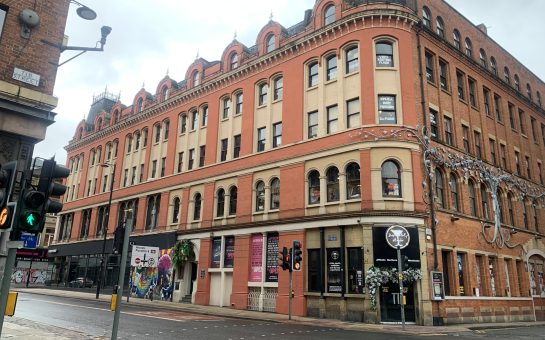
Walk past any Manchester high street and it’s hard not to notice what’s missing. Bookmakers are still there, but fewer than before, and some sit half-empty even on a Saturday. Most of the action has moved onto phones. Bets now get placed on the bus, in the pub, or during half-time. That change sounds simple, but it has knocked the system off balance.
Shops closing while screens take over
The numbers out of Ireland tell the story without much dressing up. Ladbrokes is closing 39 shops, with 226 jobs at risk, even though it will keep 66 locations open with more than 350 staff still in place. That is not a small trim. That is a clear sign that foot traffic is not what it used to be.
The reason sits in plain sight: betting has moved to apps. A phone does the same job as a shop, only faster and without opening hours. That puts pressure on any system built around physical locations. Rules written for shops do not always land the same way when everything happens through a screen. Ireland has taken that as a starting point rather than something to patch later.
A system built around online reality
Ireland is not tweaking the edges but building an entire new structure. The Gambling Regulation Act 2024 set up a central authority with control over licensing and oversight. The details are still being shaped, and that is where things get interesting.
A tiered licensing model is on the table, with fees linked to operator size or revenue rather than a flat cost. Larger platforms would pay more. Smaller operators would not get squeezed out before they even start. It is a simple idea, but it shows a system trying to match the shape of the market it regulates.
That approach stands out because it accepts what the market already looks like. Online gambling is not a side channel anymore. It is the main road.
Choosing between platforms starts to matter more
Once everything moves online, the small differences between platforms start to count. One site pays out quickly while another takes longer. One has a clean interface bur others feels clunky after ten minutes. These are the details people notice once the novelty wears off.
That is where structured comparisons come into play. The reviews of Irish gambling platforms on Casino.org lays out those differences side by side, from bonus terms to payout speed and overall reliability. It gives a clearer sense of what sits behind each option without having to test them one by one.
That kind of clarity becomes more useful when regulation tightens. Fewer shortcuts. More scrutiny. People start paying attention to what they are signing up for, not just the headline offer.
There is a tendency to think instinct is enough. Pick a site, place a bet, see what happens. It works for a while, until it doesn’t. Patterns have a tendency to be misread and decisions get rushed.
There is a useful parallel in how people use data in other parts of life. Charts do not predict what will happen next, but they help avoid obvious mistakes by showing what has already happened. The same logic carries across here. Structured information does not guarantee a win, but it does cut out a lot of blind guessing.
That shift in behaviour sits alongside regulation. One pushes from the top down. The other builds from the ground up. Together, they shape how people engage with the space.
Regulation shapes access as much as it controls risk
Rules do not just control behaviour. They decide who gets through the door in the first place. That shows up clearly in other sectors. Funding cuts in the arts have narrowed access, with only 8% of TV and radio workers coming from working-class backgrounds and apprenticeship routes accounting for just 0.5% of roles.
Different industry, same principle. Regulation can open things up or quietly limit who takes part. In gambling, that plays out through licensing costs, advertising rules, and how platforms are allowed to operate. Ireland’s model leans toward control with structure. The aim is not just to reduce harm, but to shape the environment people step into.
A clearer path than constant adjustment
The contrast between Ireland and the UK sits in how each system reacts to change. Ireland is building with today’s habits in mind. Online first. Central oversight. A licensing model that scales with the operator.
The UK has a longer history and a larger market, but that brings its own complications. Adjustments get layered on top of what is already there. It works, but it can feel uneven in places.
That difference does not stay theoretical for long. Manchester follows the same pattern as everywhere else, with more betting happening on phones than in shops, and local high streets feeling the change first. A system built around that reality tends to hold together better. Ireland is moving in that direction.
The UK is still catching up in places.
Featured image credit: Unsplash