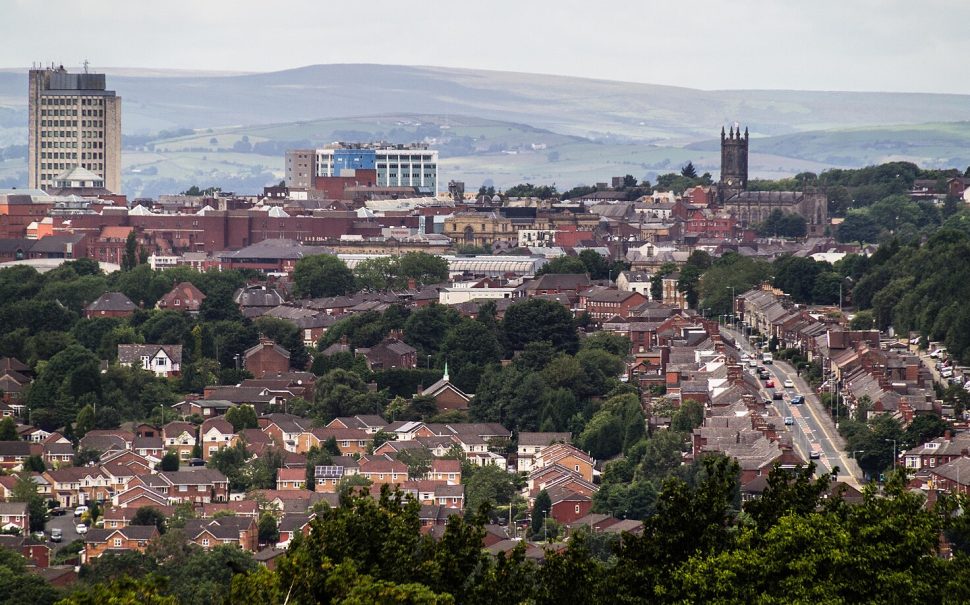
The 2026 local elections are in just two days’ time, soon voters in Oldham will be heading to the polls to cast their votes in an election already being described as toxic.
The Council is currently under no overall control, being led by a minority Labour leadership. Voters will elect 20 out of 60 council seats.
Oldham is one of ten Greater Manchester boroughs. 2026 brought a record-breaking 127 candidates standing in this election.
What happened in the 2022 election
In the local elections in 2022 in Oldham. The results were:
- Labour: 9 (37%)
- Conservative: 4 (21%)
- Liberal Democrats: 3 (13%)
- Labour and Co-operative: 2 (9%)
- Failsworth Independent Party: 2 (5%)
- Independent: 1 (5%)
The political climate by late 2024 in Oldham was defined by an incident in which police were called to a council meeting after two Conservative councillors, Lewis Quigg (who later defected to Reform) and Graham Sheldon, were involved in a physical altercation.
Research-Projections for 2026 suggest a fragmented result, with Reform UK and The Oldham Group expected to challenge Labour’s historic dominance in several battleground wards, including Chadderton South and Hollinwood.
What are the local issues?
Oldham is a borough marked by deep-seated socio-economic disparities, often ranking as one of the most deprived areas in the whole of England.
Approximately 42.2% of children live in relatively low-income families, which is the highest rate in England. There is a sharp divide between areas like Saddleworth North, with a £41,316 median income, and deprived inner-city wards like Alexandra, with a £15,490 median income.
As of February 2026, the general unemployment rate stands at 6.4%. This is the highest claimant rate in Greater Manchester.And one third of Oldham’s neighbourhoods are among the top 10% most deprived in England.
Oldham reportedly has the highest rate of council-funded mobility adaptations to homes, such as stair lifts specifically for children.
Who can you vote for?
Each ward has three councillors, but voters will elect only one councillor per ward.
The Liberal Democrats have 20 candidates standing in all wards. Reform UK and the Green Party are, for the first time, fielding candidates in all wards, with Reform UK and the Oldham Group largely focusing their campaign on transparency audits and Child Sexual Exploitation (CSE) investigations. Accusing the Labour administration of historic cover-ups, involving CSE and demanding a full, statutory inquiry.
- Labour: 20 candidates covering all wards.
- Liberal Democrats: 20 candidates covering all wards.
- Reform UK: 20 candidates covering all wards.
- Green Party: 20 candidates covering all wards.
- Conservatives: 13 candidates covering select wards.
- Oldham Group: 8 candidates in select wards (includes 1 Workers Party alliance.)
- Independents: 13 candidates in various wards e.g. Alexandra, Chadderton, Royton South.
Key Candidates to Watch
- Mohammed Imran Ali (Independent, Werneth): A controversial candidate whose past association with Dale Cregan has made his campaign a focal point of local media attention.
- Saniya Abid (Labour, Hollinwood): Attempting to win back a key seat for Labour in a ward where projections show a razor-thin lead of just 1.7% over Reform UK.
- Robert Barnes (Reform UK, Hollinwood): Representing Reform’s major push into traditional Labour wards.
There are also several high-profile incumbents facing strong challenges from Reform UK and Independent groups such as:
- Alexandra: Shaid Mushtaq (Labour,) Susan Brown (Reform UK)
- Hollinwood:Abdul Wahid (Oldham Group,) Saniya Abid (Labour)
- Failsworth East: Neil Hindle (Failsworth Ind,) Chris Goodwin (Labour)
- Saddleworth North: Luke Lancaster (Conservative,) Samuel Hollis (Labour)
- Chadderton Central: Nazrul Islam (Labour,) Alexander Lomas (Reform UK)
A full list of candidates can be found easily on Oldham council’s website.
Population and statistics
Oldham has a total Population of approximately 251,560. as of a 2024/2025 census, with the 2026 population expected to remain within an upward trend of steady growth.
The borough has experienced a faster-than-average population rise, with a diverse demographic, where nearly 18% of residents were born outside the UK, with a young population, median age of 36.9 years, which falls below the UK average of 40.7 years.
Whoever secures the majority of seats and gains leadership in the election will have a lot to accomplish in a short time.
Constituents are being encouraged to have their say, by casting their votes on election day.
Election Schedule & Deadlines
Election Day: 7 May 2026 (Polling stations open 7am–10pm).
Main image: Copyright Peter McDermott and licensed for reuse under this Creative Commons Licence.