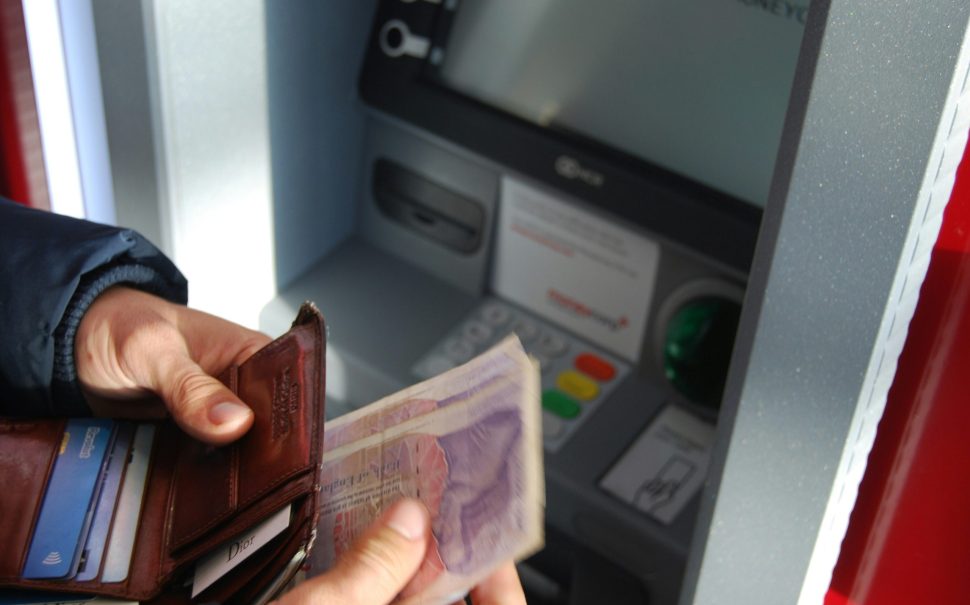
UK consumers are spending more in shops using their cards than in the past.
Data from Visa covering face to face card spending from 2019 Q1 to 2025 Q2, shows a 3% rise in card payments from 2019 to 2024 and a 6% rise in card payments from 2020 to 2024.
UK Face-to-Face Card Spend Between 2019-2024:
For many members of society, the rise in card payments often goes hand-in-hand with the refusal of cash, leaving consumers without options.
Ron Delnevo, the founder of The Payment Choice Alliance said: “We are simply arguing that the public should have the choice.”
He added: “I view cash as a pillar of democracy”.
The Payment Choice Alliance aims to ensure the UK Payment Choice Act becomes law – and Delnevo says the movement is gaining momentum.
He said: “Support is huge, with the equivalent of around 40 million adults telling us via survey work that they want to have the legal right to use their cash”.
To ensure the right to choose, Delnevo calls for people to use cash “wherever they can” and “spend cash only with businesses that give them the choice to do so – and supporting the PCA!”.
Delnevo founded the Alliance in 2014 in response to the government’s move to cashless bus payments under Boris Johnson.
He highlights the irony of this, comparing the switchover to the previous success of the New York bus cash boxes.
The system meant drivers weren’t handling cash and travellers weren’t forced to use card payments.
A system which has been used since the 60s and is now also turning cashless in 2026 in favour of the new OMNY card.
Commuter Martine Lamarque told amNY : “A lot of elderly people are not going to like that since some are used to paying the fare using coins and don’t trust using a credit or debit card”.
Those likely to be greatly affected by the refusal of cash are vulnerable members of society such as the elderly, disabled, homeless and even those in abusive relationships.
Delnevo said: “ It maintains privacy and freedom of action – it cannot be monitored and controlled by 3rd parties and does not require 3rd party authorisation.
He added: “It offers businesses and the public an alternative, competition that to an extent keeps the charges of the likes of Visa, Mastercard and Apple under control”.
Of the 2652 regions in the Visa dataset, the majority saw card usage from 2019 but anomalies like Heckmondwike, Yorkshire and Dukinfield, Greater Manchester, didn’t register sufficient data for registered card spends until Q3 in 2024.
Spending Anomalies: Heckmondwike and Dukinfield data
Both locations have populations under 25,000 according to the most recent censuses, suggesting that even smaller towns are favouring a cashless approach.
One crucial factor in the increasing adoption of card transactions is the Covid 19 Pandemic.
As movement was restricted through government imposed lockdowns, 2020 naturally saw a drop in face-to-face card transactions as citizens were spending more time at home and UK online retailers saw sales rise by 48% to £113bn according to Ofcom data.
As Covid-19 was a new virus, there was much fear around how it could be spread and the public turned towards public bodies for guidance.
In an interview with The Telegraph, a WHO spokesperson said: “We know that money changes hands frequently and can pick up all sorts of bacteria and viruses”.
Many shops refused cash as tender and as such this set the foundations for our changing attitude towards cashless payments.
The Visa figures reflect the easing restrictions through the upwards trend of increased face to face card spending.
In Q3 of 2020, Rishi Sunak introduce the ‘Eat out to Help Out’ scheme.
The scheme sought to boost the suffering hospitality sector by offering a subsidised 50% off scheme for diners with the intention to counter the economic impact of Covid-19.
As a result, the data shows that there was an increase of 10,000 pounds for the average face to face card payments across the UK in Q3 of 2020.
Eat Out to Help Out and Its Effect on Face-to-Face Spending:
Post-pandemic, many businesses have officially made the switch to only accepting card payments.
This includes many large high-street chains such as Itsu, Zizzi’s and Côte Brasserie.
Zizzi’s mentions the reason for this is “to provide the smoothest and fastest payment experience, and to keep our teams safe”.
Feature image: By Nick Pampoukidis on Unsplash