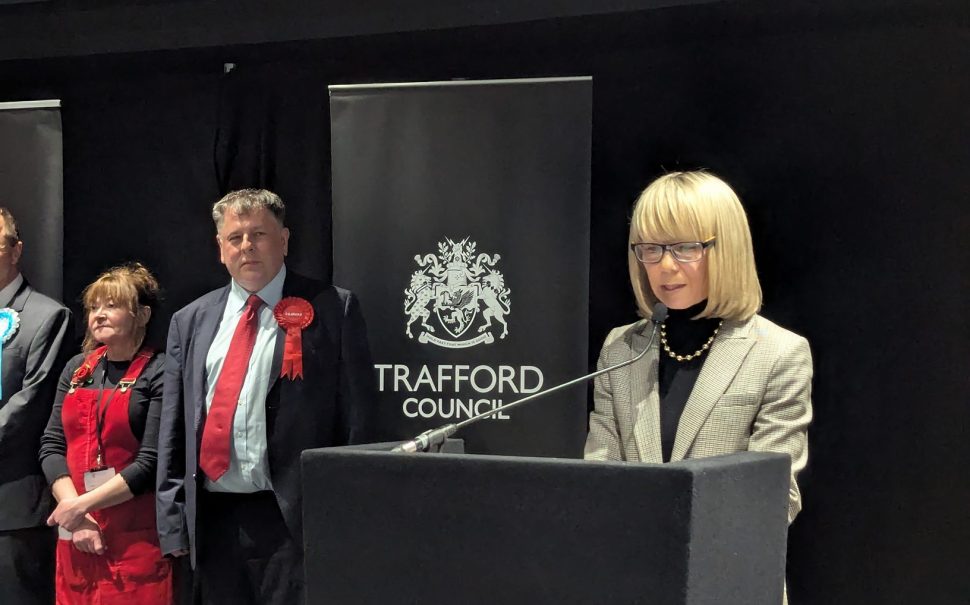
Labour managed to maintain control of Trafford Council despite losing six seats to three different parties.
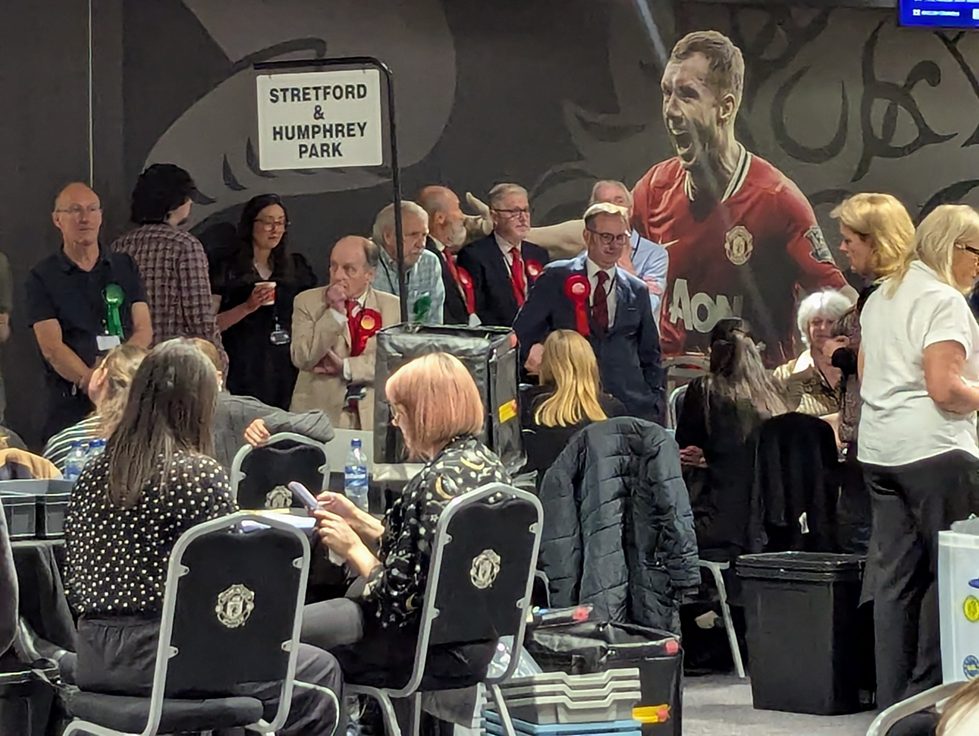
Of the 21 seats up for grabs – one third of Trafford’s total overall seats – Labour won eight, losing three to the Greens, two to Reform and one to the Conservatives.
This drops the number of seats Labour holds in the borough to 35, just three above what is needed for them to maintain a majority.
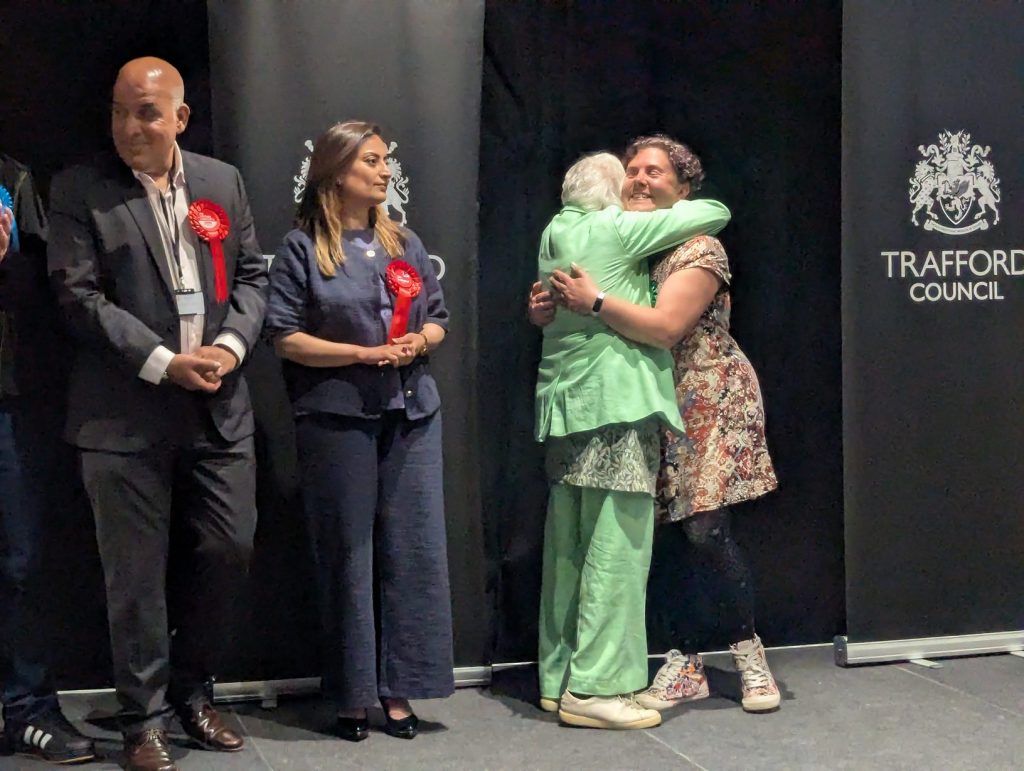
The Greens and Reform had cause for celebration, but didn’t see the same sweep of available seats that they did in other boroughs of Greater Manchester.
Winning Old Trafford Green Party candidate Jennie Wadsworth said: “Over the past few months with the various results we’ve had, it shows that a Green vote is not a wasted vote anymore, and people can now vote for what they believe in, and win!”
Results in Trafford were the final set of results announced for Greater Manchester, with Reform having won vast swathes of seats across Bolton, Wigan and Tameside earlier in the day, and the Greens taking 18 seats in Manchester.
The Conservatives also staged a minor comeback, winning Hale, the seat vacated by new Green Party MP Hannah Spencer, and gaining a seat in Broadheath back from Labour.
Spencer was at the count to support her colleagues, seeing them hold their seat in Altrincham, and take the three seats that border central Manchester in Longford, Old Trafford, and Gorse Hill and Cornbrook.
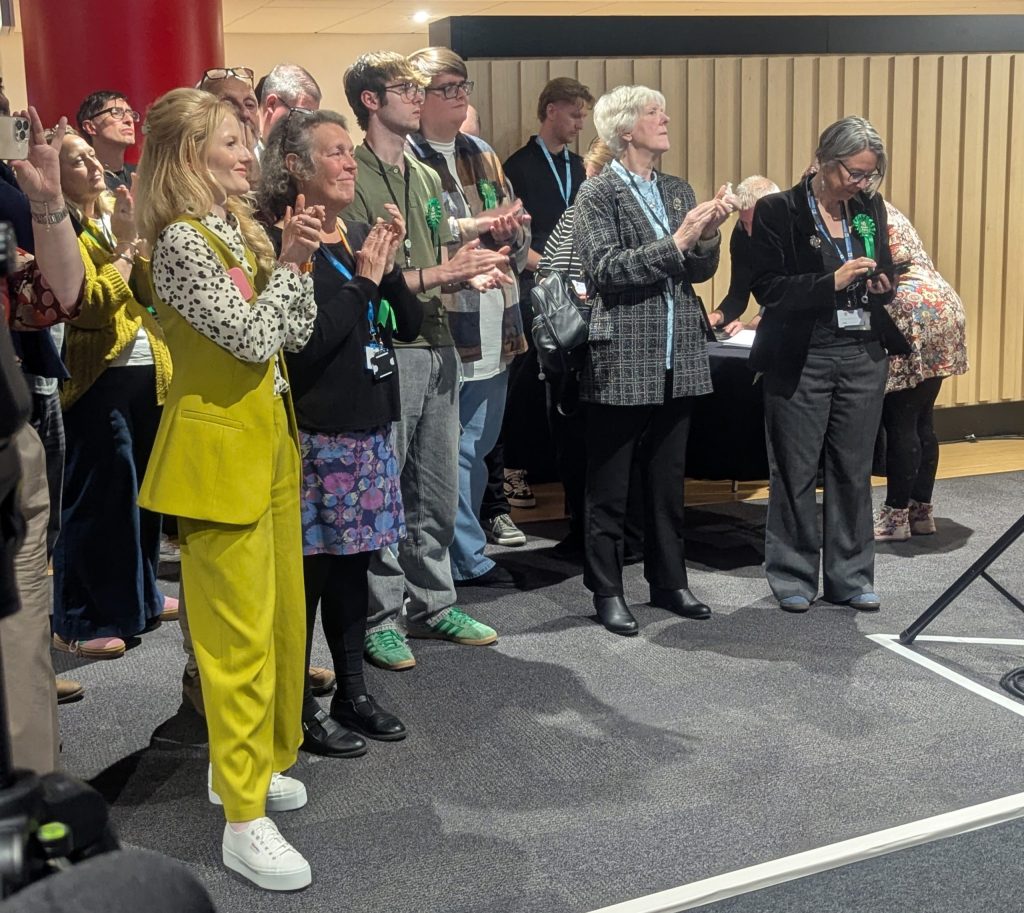
The Liberal Democrats also held their two seats in the Timperley wards.
The results mean there are now five different parties with at least two seats each at the increasingly fragmented Trafford Council.
A survey by Sortiton for the Local Democracy Reporting Service in April found that respondents in Trafford had the lowest level of trust in their local council in all of Greater Manchester, with 42% reporting low trust in their council, compared to 16% in neighbouring Manchester.
Successful Reform candidates said that they believe voters put their trust in them because they actually live in the communities they represent, meaning they are more in touch with local issues.
Newly elected Reform councillor Charlotte Waterworth said: “You have to start with listening to residents.
“I actually live in the area I stood in. I’m embedded in the local community. The people that voted for me are parents from my children’s school. That’s why I think people trusted me with their vote.”
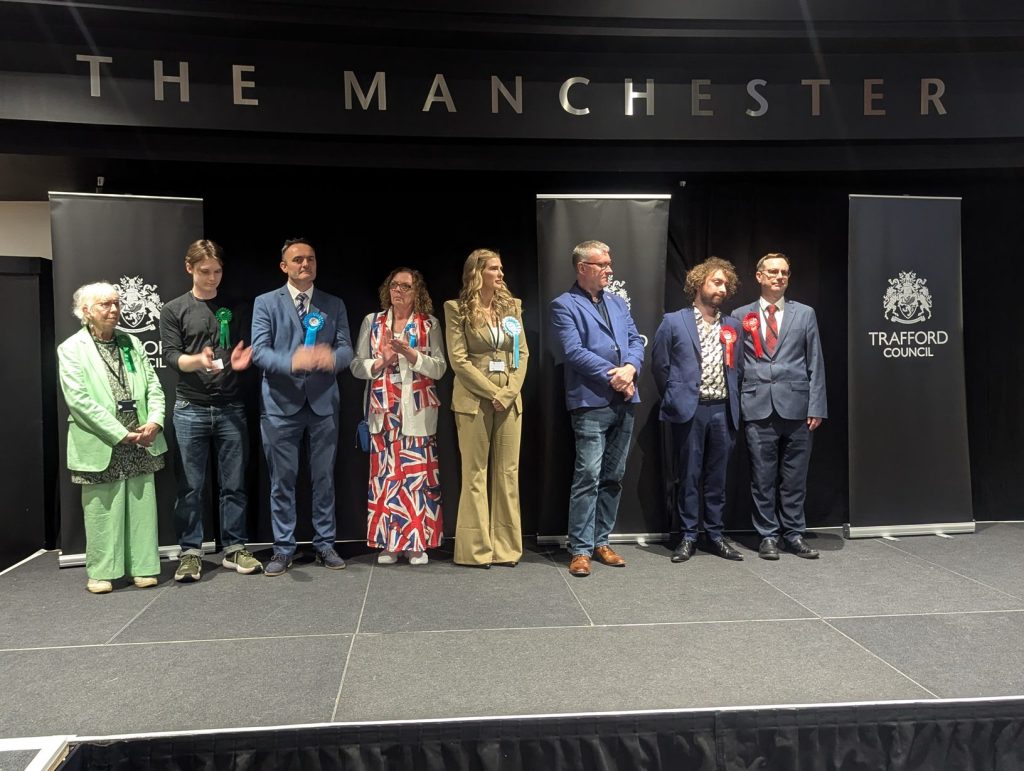
Councillor Geraldine Coggins, Leader of the Green Party Group in Trafford, told me: “Trafford Council is in extremely deep financial trouble. People talk about the potholes, but the potholes are a symptom of a wider issue.
“We know that all our other services are in the same state as our roads, and people can see that, they know that we’re not getting the services we deserve.”
The results in Trafford appear to be a microcosm of what we are seeing nationally; Labour just about clinging on to power while facing Green surges in the more urban areas, Reform challenges in more neglected areas on the fringes of the city, and the Conservatives making up lost ground in areas they previously held before the last election.
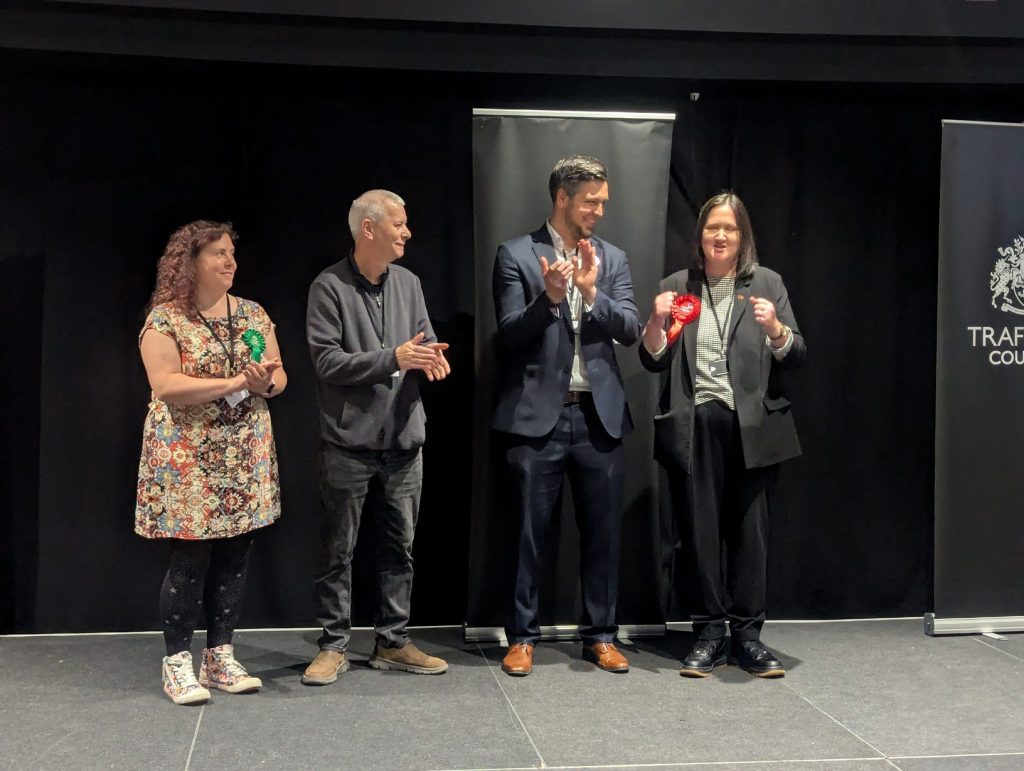
As the newly elected councillors take their seats, it appears their task is to try and rebuild voter trust in a council and a political system that has struggled to deliver locally.
Results here in Trafford today may give us an important indication of how the political landscape and the fragmentation of the traditional two-party system may play out nationally in the years ahead.
Featured image: Returning officer Sara Todd delivers an election result at the Trafford local election count. Phot by Carly Lyes for MM.