How do you start a running club for people whose only shoes are a pair of flip flops?
Sourcing appropriate footwear was the first challenge Jane Dennison faced when setting up Refugee Run Club, a running club at a Manchester hotel for people seeking asylum. Fortunately, it was fairly easy to overcome. As the founder and CEO of MileShyClub, a running club turned health and wellbeing charity, Jane had nearly 8000 members to call on to find spare running gear for young men who had arrived in the country with nothing more than the clothes they were wearing. Bigger challenges came from working in a highly politicised local environment where anti-migrant violence posed a real risk.
“On our first run outside, there were cars slowing down next to us, and I was thinking, ‘Oh God, is this guy going to get out and deck someone?’ People who knew what we were doing, who were worried about me, said ‘You’re gonna get a brick through your car window.’” The hotel – which we are not naming for security reasons – had been the subject of ongoing protests. The need to keep both the participants and the volunteers running the sessions safe was the reason why, despite starting the project in January of this year, she and MileShyClub have only recently decided to make the project public knowledge.
“I’d seen in the news that the men inside were having fireworks thrown at them, and being told to jump out of the windows,” says Jane. “I was just disgusted and mortified that they were coming to this country, risking their lives on boats, and being subjected to that. I know from working with people from similar situations previously how much trauma they must have experienced to have made that journey. I thought, what can I do to help?”
Jane is uniquely positioned to support people experiencing trauma. It was her own experiences of domestic abuse, homelessness, and mental ill health that led to her setting up MileShyClub in 2017. Having experienced a profound positive shift in her mental health after taking up running, Jane decided to try and bring that benefit to others. Starting with just a homemade flyer posted on noticeboards around Sale, the club has grown from 33 people on its first run to between 900-1000 people attending sessions every week. The club, now refocused as a preventative health charity, currently encompasses 16 beginner running clubs, nine walking clubs, two mental health groups and a stretch-and-relax yoga session which all operate under the mission statement “No-one gets left behind.”
In November last year, Jane was driving past the hotel a few times a week and kept noticing the residents sitting outside, smoking, looking bored. “I thought, ‘Wouldn’t it be amazing to help them get more active?’ I wanted to help in a practical way. I contacted a charity I knew were doing some work with the hotel and through them we ended up agreeing to run a Couch to 5k programme, similar to the ones we run in the community.”
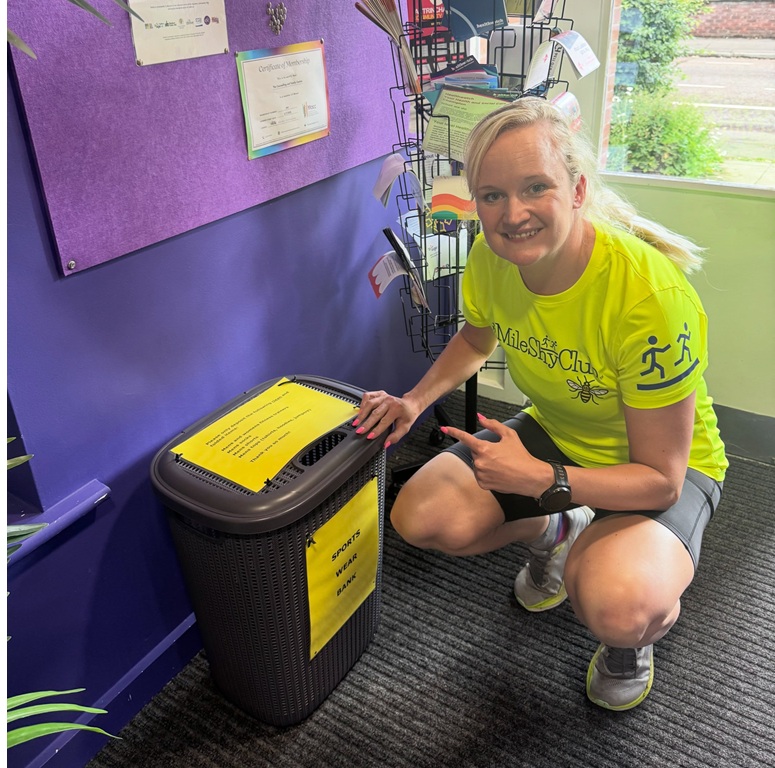
The lack of running gear was the first hurdle. “Most of them didn’t have trainers. They had flip flops, and they get given state-commissioned joggers and a jumper. That’s it. Some of them wouldn’t run because they only had one t-shirt, which they had to sleep in, and they didn’t want to get it dirty.” Jane reached out to her network – runners, local sports shops and sportswear companies – to source spare running gear that could be donated, but she couldn’t tell the donors who it was for and why due to the security risk. “It could have scuppered the whole project if the protestors had got wind of it. The guys in the hotel couldn’t even play football in the local park because residents had objected.”
The next problem to overcome was where to run. “Some guys initially said they couldn’t run because they had heart problems, but when we dug a bit deeper, it turned out they were having panic attacks and were too scared to leave the hotel. So we decided to do it inside the hotel.” Starting in January, Jane and her small band of volunteers helped the residents complete Couch to 5k over eight weeks. For some runs they had 50 participants, others five. Some residents got so much out of it, they even ran while fasting during Ramadan. In those initial sessions, language barriers were overcome using Google Translate and music. “I brought the international language of Michael Jackson on a Bluetooth speaker. And Pitbull!”
As the nights got lighter, they ventured out to run in the local area, all the time having to take careful measures to keep participants safe. Some participants had never used a pedestrian crossing before. Session times had to be changed every week so protestors couldn’t work out a pattern of when they were leaving the hotel. Routes had to be carefully planned so as to always have a way to cut back to the hotel quickly. “Some of the guys were really scared that they’d get jumped. One week we could hear a football match happening. A lot of the guys are really into football and were desperate to go and watch, but a lot of the group were scared, so we had to make it clear we were sticking to just the run as planned. You have to acknowledge the trauma they’ve experienced and make sure they feel safe.”
The initial programme finished in April, but the level of need of the participants, coupled with the positive response from MileShyClub members and the local community after Jane and team went public about the programme, gave them the motivation to go back in and start a new programme in May. “I was like, well, if people know about it, we can start doing collections for running gear and help more people. I did a push on donations last week and now the collection points are maxed. My lounge is under a mountain of bin bags.”
Despite the challenges, Jane firmly believes that the benefits to the participants have made it well worth the risk. Week on week they have seen an increase in participants’ happiness levels. “At an event last night, a financial advisor I was talking to about MileShyClub said, ‘Have you heard about this running group that is running with refugees? I saw them the other day. They were all so happy to be running and out in the community. You could just tell, they all were beaming.’ I asked where it was, she told me and I said ‘That’s us!’ That was really special.”
Jane and team have also seen an increase in the support the participants have started to receive from local residents. “Now people beep us when we run past them in the street. They’re like, ‘Go on guys, you can do it!’ There’s so much local support for it. Not necessarily for the bigger picture of the hotel and the politics, but just for these young lads. And they are young, really young. They’re 18, 19 year olds. It breaks your heart if you think about them leaving their families.”
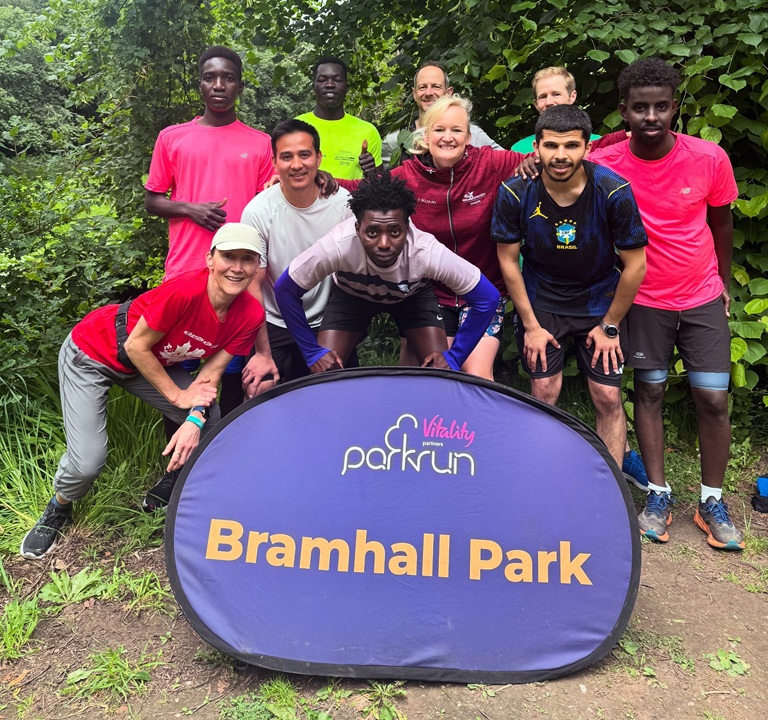
The local running community have also welcomed the participants with open arms. “We took a group of them to Parkrun, a local 5k run, a few weeks ago and everybody knew where we were from. There’s this question at Parkrun where they ask, ‘Has anybody travelled far to get here?’ The first time we went, I didn’t dare answer that question because I thought, if I shout out ‘Ethiopia!’, people are going to go, ‘What!?’ and it increases the risk. But this time, I yelled out ‘Sudan!’ and everyone cheered. A guy who was next to me got in touch as a result. He works for a major sportwear company, and sent us some new gear.”
The future of Refugee Run Club remains uncertain. The current government has a target to end the use of asylum hotels. Everything done so far has been done voluntarily, with no funding. Jane has been starting to build relationships with other running clubs in the area who have qualified run leaders who can come in and lead group runs. She would like to expand to running other activities that would help residents stay active and improve their mental health, particularly football. She would also like to see running clubs coming forward to set up similar projects for residents at other local asylum hotels.
“I’d love to see other clubs get involved in projects like this. It’s an incredible thing to do. It really shows you humans at their best, I think. The young men who come along are so respectful, so grateful, so thankful. I’m just glad that when they do leave the hotel, they leave knowing that people in the community really do want to help them.”
If you would like to support Refugee Run Club, you can contact MileShyClub via their website mileshyclub.com or donate via their JustGiving page – make sure to quote “Refugee Run Club” when making the donation so it is allocated to the correct project. https://donate.justgiving.com/charity/mileshy_club/donation-amount
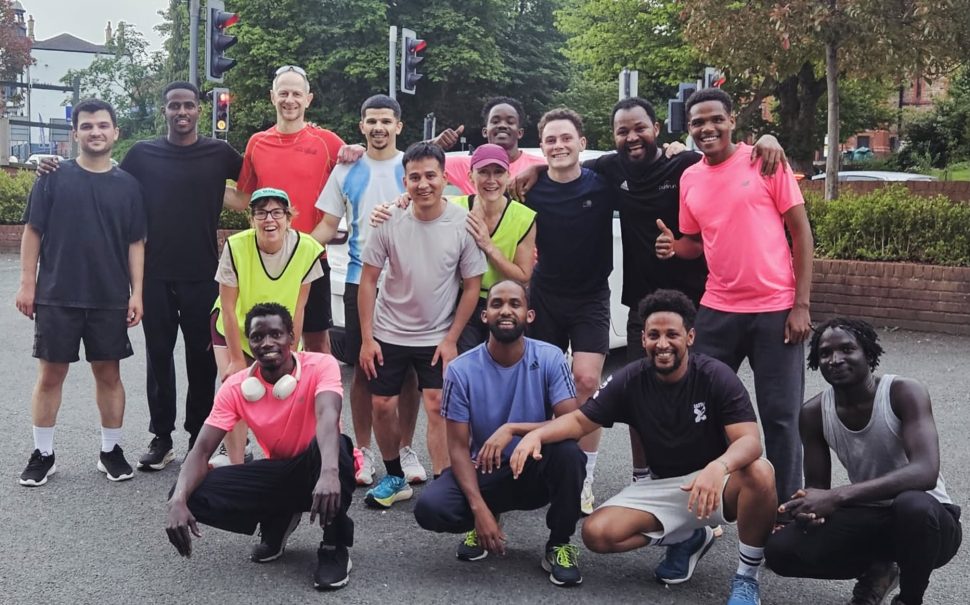
Featured Image: People seeking asylum at a Manchester asylum hotel join a run organised by MileShyClub as part of their Refugee Run Club couch to 5k programme. Image by Jane Dennison.