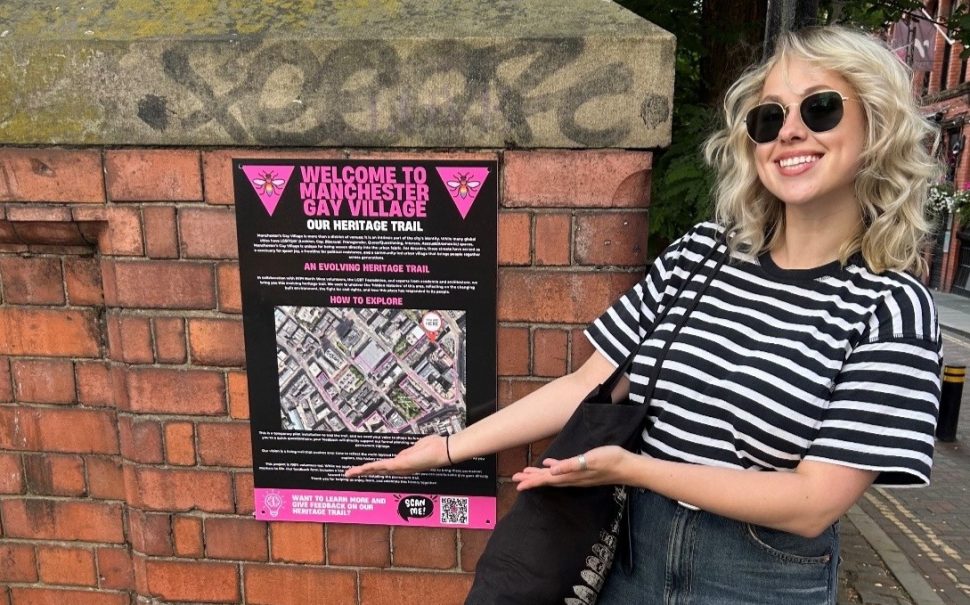
Volunteers behind Manchester’s LGBTQIA+ Heritage Trail are working to secure funding and planning approval for permanent signs after temporary installations received positive feedback from the public.
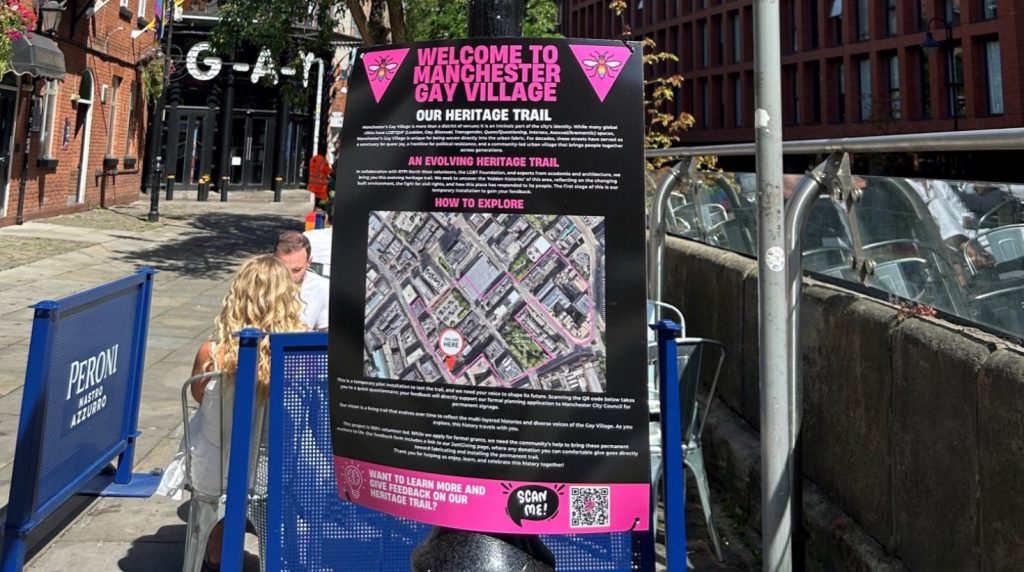
The trail debuted in August with a consultation stage for the public to test out and give feedback via a QR code on the signs.
It takes you across the Gay Village, through iconic queer spots on Canal Street to lesser known locations that have significant importance to Manchester’s LGBTQ history.
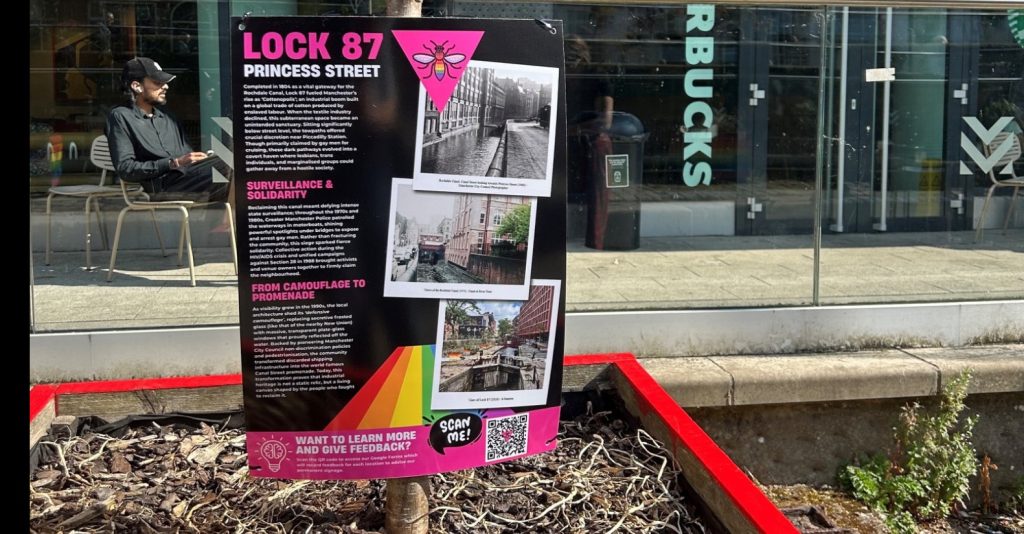
The initial locations on the trail include Lock 87, New Union, the former Manchester Gay Centre, Vanilla, Molly House, Kampus, and Cruz 101 – although future plans for the trail could see new places added.
The project was started around three years around the same time Manchester City Council published the Gay Village Action Plan in March 2024 set out a series of ambitious interventions and activities for the Gay Village and needed members of the community to help deliver this.
Since then, the trail has been created by volunteers from the Royal Town Planning Institute (RTPI) North West in partnership with LGBT Foundation, Manchester Village Pride, Manchester Metropolitan University (MMU) and Manchester City Council.
The trail received around 175 overwhelmingly positive responses despite challenges like having the signs stolen or damaged.
Sophie Stanton is one of the lead planners on the project representing RTPI North West.
On receiving feedback from the public, Sophie said: “It was quite emotional seeing how many people connected with the trail and learned something new about a building they didn’t realise had such a pivotal role in the civil rights movement”.
The volunteers are going into the next stages of the process for permanent signs which includes securing funding, drafting plans for what the signs will look like and working with the National Lottery Heritage Fund with hopes to have a permanent trail next year.
Stevie Watson from LGBT Foundation, a national charity based in Manchester, worked closely on the project.
She said: “In the responses, people were like ‘we need to be shouting about this. We need to be proud of what we’ve got here’”.
Sophie says that queer history in Manchester involved a lot of “community-led mutual support” which she says speaks to the ethos of the trail’s creation.
She also added that 61a Bloom Street, the former home of the pioneering Manchester Gay Centre, was the home of the LGBT Foundation between 1981 and 1988.
Sophie highlights the heritage trail as an alternative option for people who want social activities in the Gay Village but are not big on nightlife.
Also, the trail can be more accessible than other guided tours of the Gay Village that are run at fixed times as this is a self-guided tour.
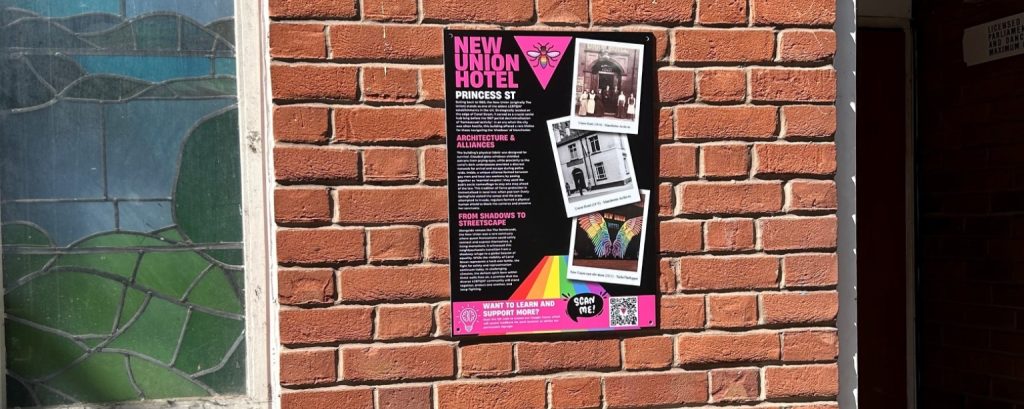
The volunteers collected photographs from archives provided by Manchester Metropolitan University, businesses in the Gay Village provided never-seen-before pictures, and the team took their own pictures to show a comparison.
Michael Atkinson-Smith, from the Royal Town Planning Institute, provided expertise in planning having worked on a number of heritage trails for the council.
He said: “Heritage is not just, ‘this is an old building and it looks nice’, it’s what’s the story behind it? Who inhabited it? Why is it important?”
“A lot of these histories are hidden so you might get local enthusiasts but the vast majority of the general public when they walk around an area they don’t know what the story is.”
He notes that in the consultation feedback, trail users expressed appreciation for having those layers of knowledge that will “get lost unless they’re told”.
As the project has been promoted on social media, the volunteers have seen negative comments from “people who don’t agree with the LGBTQIA community”.
But Sophie said comments like these “set off a catalyst” and proves that “it is important that we talk about this history and create a space that invites LGBTQIA+ people and loves them”.
Stevie hopes that in a year’s time the permanent signs will be up and that overall, the trail generates some further interest in Manchester’s queer history.
All images courtesy of: Sophie Stanton

Join the discussion