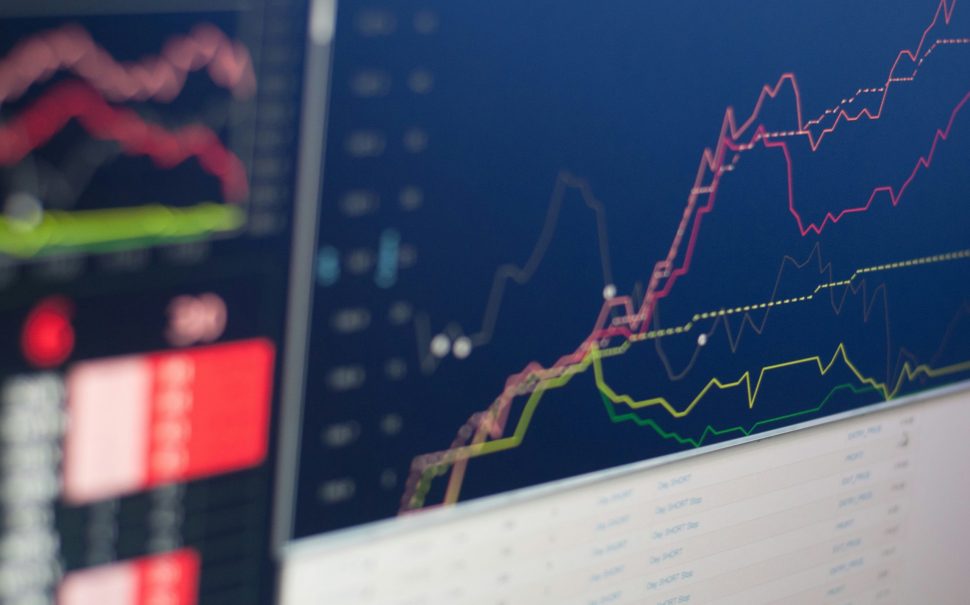
In volatile markets, people crave certainty. Charts cannot offer certainty, and pretending otherwise is the fastest way to lose money.
Their real value is more practical: they organise information, define scenarios and force decisions to be explicit. A chart helps answer simple but critical questions.
Is price trending or ranging? Where has the market repeatedly reacted? How strong is recent volatility? Where is the idea objectively invalid?
These questions do not remove risk, but they turn vague intuition into testable structure. For individuals learning market behaviour, that structure is often the difference between controlled participation and emotional drift.
The social-media distortion of technical analysis
Many newcomers learn charting through short clips and polished screenshots, especially in today’s Manchester.
The content usually highlights clean patterns and dramatic outcomes, but it rarely shows failed setups, uncertain conditions or disciplined exits.
That distorts expectations. Technical analysis becomes theatre rather than process. Real chart work is quieter.
It involves context, timeframe alignment, liquidity awareness and a pre-defined risk plan. It is not about proving a clever forecast.
It is about reducing preventable errors. When people approach charting as performance, they overfit and overtrade. When they approach it as risk organisation, their decision quality improves.
Ask better questions before you act
Before placing any position, start with structured questions. What market condition am I in right now: trend, range, or transition?
Is my timeframe consistent with my holding horizon? Where is my invalidation point, and is that distance compatible with my position size? If I am wrong, how much does this cost in real terms?
Learning to trade from chart becomes useful only when these questions come first. Otherwise, charting becomes decoration around impulse.
Good technical work is not a search for perfect entries. It is a framework for imperfect markets.
Why simplicity usually wins
Beginners often believe that more indicators create more certainty. In practice, too many signals create conflict, hesitation and post-hoc rationalisation.
Simplicity is usually stronger: price structure, support/resistance behaviour, volatility context and one clear risk rule. The aim is clarity under stress.
If a framework cannot be explained in a few lines, it may be too complex to execute consistently when markets move quickly. Consistency, not complexity, is where most of the edge lives.
Chart discipline beyond trading
Even for people who do not trade actively, chart literacy has practical use. Small business owners, freelancers and households can benefit from understanding trend and volatility dynamics that influence costs, sentiment and planning assumptions.
You do not need to place trades to gain value from better market interpretation. In uncertain economic periods, informed timing and better scenario thinking can improve real-world financial decisions.
The bottom line is simple. Charts are tools, not prophecies. Used badly, they amplify noise. Used properly, they impose discipline.
In 2026, with narratives shifting quickly and confidence frequently overstated, that discipline is not a luxury. It is a form of protection.
Featured image: by Nicholas Cappello on Unsplash
Join the discussion